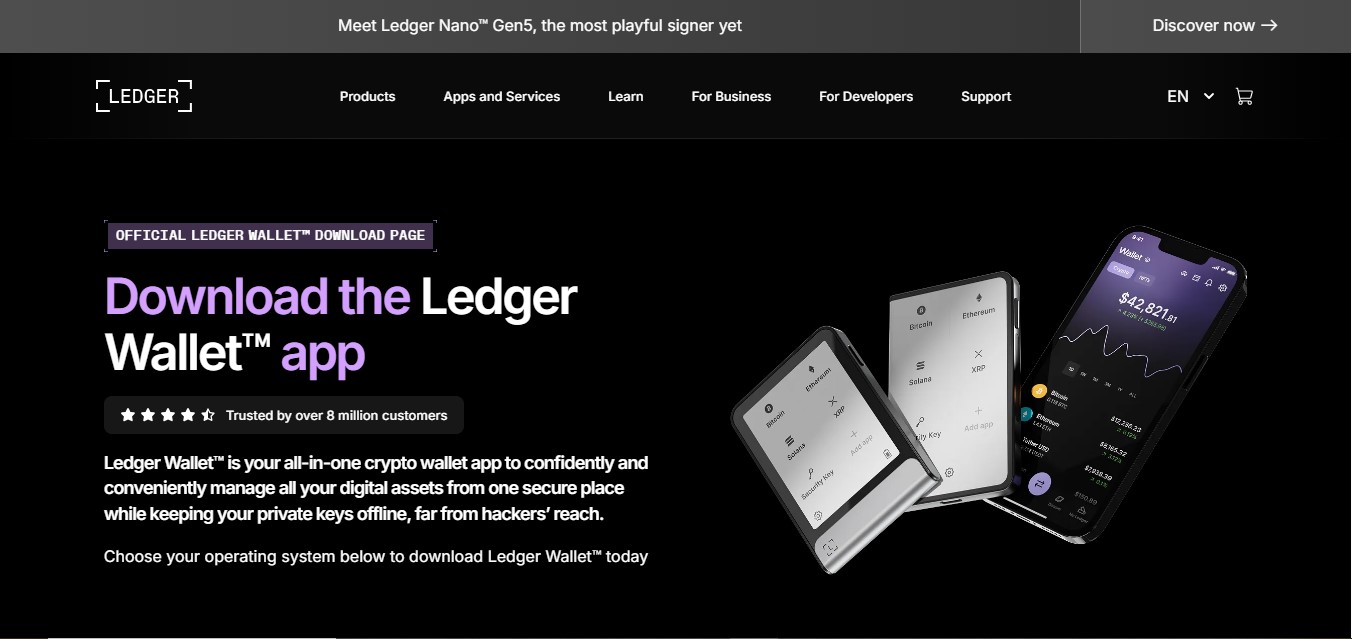
Ledger Start – Easy Guide to Ledger Hardware Wallet
Cryptocurrency ownership brings unprecedented control over your financial assets, but it also carries a major responsibility: keeping your crypto safe. While software wallets are convenient, they are vulnerable to malware, phishing, and hacks. This is why hardware wallets, like Ledger devices, are considered the most secure solution for storing crypto. Ledger wallets store your private keys offline, making it extremely difficult for hackers to access your funds.
This guide, Ledger Start – Easy Guide to Ledger Hardware Wallet, walks you through everything you need to know to set up and safely use your Ledger device, including installing Ledger Live, securing your recovery phrase, and managing your crypto accounts.
Why Use a Ledger Hardware Wallet?
Ledger hardware wallets provide a combination of security, usability, and control that software wallets or exchange wallets cannot match:
Private Keys Offline: Ledger devices store private keys in a secure element chip, keeping them off your computer and the Internet. This means hackers cannot access your keys even if your computer is compromised.
Transaction Verification on Device: Every transaction must be physically approved on the device itself, ensuring that malware cannot manipulate transfers.
Compatibility with Ledger Live: The Ledger Live app allows you to manage accounts, send and receive crypto, stake coins, and interact with DeFi apps while your keys remain safe.
Support for Multiple Cryptocurrencies: Ledger supports thousands of cryptocurrencies across Bitcoin, Ethereum, Solana, and more.
By combining hardware security with the Ledger Live interface, users can confidently manage a wide range of digital assets. (ledger.com/start)
What You’ll Need Before You Start
Before beginning setup, gather the following:
Ledger hardware wallet: Nano X, Nano S Plus, or Ledger Stax.
Computer or smartphone: For installing and running Ledger Live.
USB cable: Provided in the Ledger box for connecting your device (Bluetooth is optional for Nano X).
Ledger Live app: Downloaded from the official website. (ledger.com/ledger-live)
Pen and paper or metal backup card: To safely record your recovery phrase.
A calm, secure environment: Avoid distractions or interruptions during setup.
⚠️ Never use a pre-owned Ledger device or one that arrives with a pre-set recovery phrase — these may be compromised.
Step 1 – Unbox and Inspect Your Ledger Device
When you receive your Ledger wallet:
Check the seal: The box should arrive unopened and intact.
Inspect the contents: You should have:
Ledger hardware wallet
USB cable
Recovery phrase sheets
Quick start guide
If the package is tampered with, do not proceed. Contact Ledger support for verification or replacement. (supportledger-com.framer.ai)
Step 2 – Download and Install Ledger Live
Ledger Live is the official software companion for your hardware wallet. It allows you to manage accounts, check balances, perform transactions, stake coins, and interact with DeFi apps.
Steps to install:
Go to the official Ledger start page: https://www.ledger.com/start
Choose your operating system: Windows, macOS, Linux, iOS, or Android.
Download and install Ledger Live following the on-screen instructions.
Open Ledger Live and select “Get Started”.
⚠️ Only download Ledger Live from the official website. Third-party downloads may contain malware or be used for phishing attacks. (techradar.com)
Step 3 – Initialize Your Ledger Device
Once Ledger Live is installed:
Connect your device to the computer via USB (or Bluetooth for Nano X).
Turn on the device by pressing both buttons simultaneously.
On the device screen, choose “Set up as new device”.
Select a PIN code — this protects the device if lost or stolen.
Generate your 24-word recovery phrase, which is the master backup of your wallet.
Recovery Phrase Best Practices:
Write all 24 words in order on the provided sheets.
Store the phrase offline — never take photos or store digitally.
Consider a metal backup solution for durability and fireproof protection.
Ledger will ask you to confirm certain words to ensure that you recorded the phrase correctly.
⚠️ Your recovery phrase is the most critical security element. Anyone with this phrase can access all your funds.
Step 4 – Verify Device Authenticity
Ledger Live will prompt you to verify your device. This step ensures that your Ledger wallet is genuine and has not been tampered with:
Connect the device to Ledger Live.
Ledger Live checks the firmware and device signature.
Follow on-screen instructions to confirm authenticity.
This verification step protects against counterfeit devices, which could compromise your crypto security. (ledger.com/start)
Step 5 – Install Crypto Apps on Your Ledger Device
Ledger hardware wallets require apps to manage different cryptocurrencies:
Open Manager in Ledger Live.
Select the cryptocurrencies you want to manage.
Install the apps directly on your Ledger device.
After installing apps, go to the Accounts tab in Ledger Live and add accounts for each cryptocurrency. You can now send, receive, and monitor balances securely. (ledger.com/ledger-live)
Step 6 – Secure Transactions with Ledger Live
Sending and receiving crypto is simple:
Choose the cryptocurrency and the account you want to use.
Click Send or Receive.
Verify all transaction details on your Ledger device before approving.
⚠️ Always confirm transactions on the hardware device, not just on your computer. This prevents malware from altering transaction data. (ledger.com/ledger-live)
Step 7 – Explore Advanced Features
Ledger Live offers more than just sending and receiving crypto:
Staking: Delegate supported coins like Ethereum or Tezos to earn rewards.
NFT Management: View and manage NFTs securely on your Ledger wallet.
Swap & Exchange: Swap coins directly within Ledger Live using trusted third-party services.
DeFi Access: Connect to supported decentralized applications safely.
Ledger Live provides a centralized dashboard for managing all your crypto assets without compromising security. (ledger.com/start)
Security Tips and Best Practices
To maximize security:
Never share your 24-word recovery phrase. Ledger support will never ask for it.
Verify all transactions on the device screen.
Use only official Ledger Live software. Avoid search engine ads and third-party downloads.
Keep firmware up to date. Ledger regularly releases updates for security and functionality.
Backup recovery phrase securely. Multiple copies in different safe locations reduce the risk of loss.
Following these rules ensures that your crypto assets remain fully protected. (supportledger-com.framer.ai)
Troubleshooting Common Issues
Device not detected: Try a different USB port or cable.
Ledger Live not opening: Reinstall from the official Ledger website.
Firmware update issues: Follow the prompts in Ledger Live and confirm actions on the device.
Scam warnings: If asked for your recovery phrase by any website or person, stop immediately. It is a scam.
These measures ensure smooth and secure operation of your Ledger wallet.
Conclusion
Starting with a Ledger hardware wallet may seem intimidating at first, but following this easy step-by-step guide ensures a secure setup and gives you peace of mind. By combining Ledger Live Desktop with your hardware device, you gain:
Complete control over your private keys
Protection against malware and phishing
Access to multiple cryptocurrencies, staking, NFTs, and DeFi features
Remember, your 24-word recovery phrase is the ultimate key to your crypto — guard it carefully. With proper setup and best practices, Ledger provides one of the most trusted and secure ways to manage your digital assets.